Is American Satin Static - Prone?
As a supplier of American Satin, I've received numerous inquiries regarding the static - prone nature of this fabric. In this blog, I aim to explore this topic in detail, providing scientific insights and practical information for those interested in American Satin.
Understanding Satin and Its Composition
Satin is a weave rather than a fiber type. American Satin, like other satins, is characterized by a smooth, lustrous surface and a dull back. The fabric's appearance is due to the floating yarns on the surface, which reflect light uniformly, creating that signature shine.
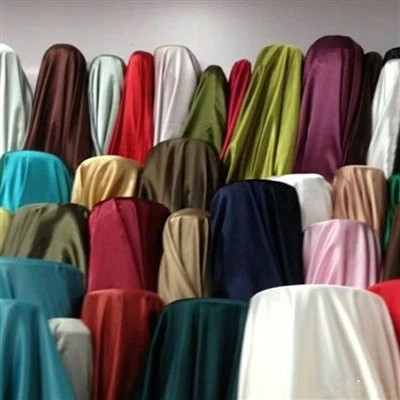
Commonly, American Satin can be made from a variety of fibers, including silk, polyester, and blends. Polyester satin is particularly popular due to its affordability, durability, and easy - care properties. For instance, our 100% Polyester Satin Cloth Satin Fabric and 100% Polyester Matte Satin Fabric are in high demand among our customers.
What Causes Static Electricity in Fabrics?
Static electricity in fabrics is mainly caused by the triboelectric effect. When two materials come into contact and then separate, electrons can be transferred from one material to the other. If the materials have different abilities to hold electrons (triboelectric series), one material will become positively charged and the other negatively charged.
In the case of fabrics, friction between the fabric and other surfaces (such as skin, other fabrics, or furniture) can lead to the build - up of static charges. Dry air also plays a crucial role. In low - humidity environments, the air cannot conduct the static charges away, causing them to accumulate on the fabric.
Is American Satin Static - Prone?
The answer depends on the fiber composition of the American Satin. Silk satin, for example, is less likely to generate static electricity compared to polyester satin. Silk is a natural fiber with good moisture - absorbing properties. The moisture in the silk helps to conduct the static charges away, reducing the build - up of static.
On the other hand, polyester is a synthetic fiber that has poor moisture - absorbing capabilities. In dry conditions, polyester satin can easily generate and hold static charges. When you walk around in a polyester satin dress, the friction between the dress and your body or other surfaces can cause a significant amount of static to build up. You may experience the fabric clinging to your legs or hair standing on end due to the static electricity.
However, it's important to note that not all polyester satins are equally static - prone. The manufacturing process can also influence the static - generating properties of the fabric. Some polyester satins are treated with anti - static agents during production. These agents can help to reduce the build - up of static charges by either increasing the fabric's conductivity or reducing the friction between the fibers.
Practical Solutions to Static Problems in American Satin
If you're dealing with static in American Satin, there are several practical solutions you can try:
- Use a Humidifier: Increasing the humidity in your environment can help to reduce static electricity. A humidifier adds moisture to the air, which allows the static charges on the fabric to dissipate more easily.
- Anti - Static Sprays: There are many anti - static sprays available on the market. Simply spray the fabric lightly, and it will help to neutralize the static charges.
- Fabric Softeners: Adding fabric softener during the washing process can also reduce static. Fabric softeners coat the fibers with a thin layer of chemicals that reduce friction and increase the fabric's conductivity.
- Metal Objects: Rubbing a metal hanger or other metal objects on the fabric can help to discharge the static charges. The metal conducts the charges away from the fabric.
Applications of American Satin and Static Considerations
American Satin has a wide range of applications, from clothing to home decor. In the clothing industry, Bridal Satin is a popular choice for wedding dresses. Static can be a major concern for brides, as it can cause the dress to cling awkwardly. When choosing American Satin for bridal wear, it's advisable to opt for anti - static treated fabrics or take preventive measures to avoid static problems on the big day.
In home decor, American Satin can be used for curtains, pillowcases, and upholstery. Static in satin curtains can cause them to stick together or attract dust. To maintain a clean and elegant look, it's important to address the static issue.


Conclusion
In conclusion, whether American Satin is static - prone depends on its fiber composition and manufacturing process. Polyester satin is generally more static - prone than silk satin, but there are ways to reduce or eliminate static problems. As a supplier of American Satin, we understand the importance of providing high - quality fabrics that meet our customers' needs.
If you're interested in purchasing American Satin for your clothing line, home decor project, or any other application, we'd love to have a discussion with you. Our team of experts can provide you with detailed information about our products, including their static - generating properties and any anti - static treatments available. Contact us to start the procurement negotiation process, and let's find the perfect American Satin solution for you.
References
- "Textile Science" by John H. Tortora and Robert M. Merkel
- "The Physics of Static Electricity" by David R. Lide