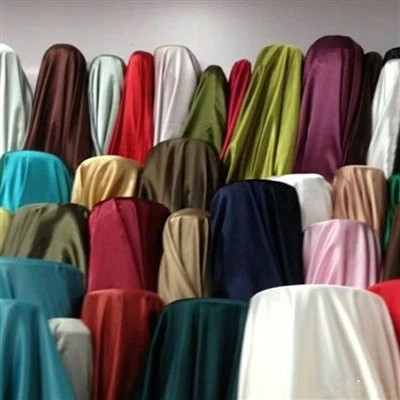
Hey there! I'm a supplier of dyed fabric, and I've been in this business for quite some time. One question that often pops up is, "What is the effect of salt in fabric dyeing?" Well, let's dive right into it.
The Basics of Fabric Dyeing
Before we talk about salt, let's quickly go over how fabric dyeing works. When you dye fabric, you're essentially trying to get the dye molecules to stick to the fibers of the fabric. There are different types of dyes, like natural dyes and synthetic dyes, and different methods of dyeing, such as immersion dyeing, tie - dyeing, and batik. But no matter the method, the goal is the same: to achieve a long - lasting and even color on the fabric.
The Role of Salt in Fabric Dyeing
So, what does salt do in all this? Salt plays a crucial role in the dyeing process, especially when using certain types of dyes, like direct dyes and reactive dyes.
1. Improving Dye Uptake
One of the main effects of salt is that it helps the dye molecules attach to the fabric fibers better. Most fabric fibers have a negative charge on their surface. Dye molecules also often carry a negative charge. Since like charges repel each other, it can be difficult for the dye to stick to the fibers. Salt, which is made up of positive and negative ions (sodium and chloride ions), can help neutralize the negative charge on the fibers. When you add salt to the dye bath, the positive sodium ions in the salt are attracted to the negative charges on the fabric fibers. This reduces the repulsion between the dye molecules and the fibers, allowing the dye to get closer to and attach to the fibers more easily. As a result, more dye is absorbed by the fabric, which means a more intense and long - lasting color.
For example, if you're dyeing a batch of cotton fabric with a direct dye, adding salt to the dye bath can make a huge difference. Without salt, the dye might not adhere well to the cotton, and you'll end up with a pale and uneven color. But when you add the right amount of salt, the cotton will soak up the dye like a sponge, and you'll get a rich, vibrant color.
2. Ensuring Even Dyeing
Another important effect of salt is that it helps to ensure an even distribution of the dye across the fabric. When you put fabric into a dye bath, the dye tends to concentrate in certain areas first. This can lead to uneven coloration, with some parts of the fabric being darker than others. Salt helps to slow down the initial rate of dyeing. By reducing the electrostatic repulsion between the dye and the fibers, salt allows the dye to spread more evenly throughout the dye bath and onto the fabric. This gives the dye more time to distribute itself evenly across the entire surface of the fabric, resulting in a more uniform color.
Let's say you're dyeing a large piece of polyester fabric. Without salt, the dye might start to cling to the edges of the fabric first, leaving the center lighter. But by adding salt to the dye bath, you can slow down the dyeing process and make sure that every part of the fabric gets an equal amount of dye.
How Much Salt to Use
The amount of salt you need to use depends on several factors, such as the type of fabric, the type of dye, and the desired color intensity.
For cotton fabric dyed with direct dyes, a common rule of thumb is to use about 1 - 2 ounces of salt per gallon of water in the dye bath. If you're using reactive dyes on cotton, you might need to use a bit more salt, around 3 - 4 ounces per gallon. For synthetic fabrics like polyester, the amount of salt needed is usually less, as synthetic fibers have different properties compared to natural fibers.
It's important to note that using too much salt can also have negative effects. If you add too much salt, it can cause the dye to precipitate out of the solution, resulting in uneven dyeing or even a cloudy dye bath. So, it's always a good idea to start with a small amount of salt and adjust as needed.
Real - World Applications in Our Dyed Fabric Business
As a dyed fabric supplier, we rely on the proper use of salt in our dyeing process to produce high - quality fabrics. We offer a wide range of dyed fabrics, including Embossed Plain Dyed Bedsheet Fabric, Polyester Ultrasonic Quilted Fabric, and Polyester Jaquard Cut Flower Fabric.
For our cotton - based fabrics, we carefully measure the amount of salt to add to the dye bath to ensure that the colors are bright, even, and long - lasting. Our customers often comment on how vibrant and fade - resistant our cotton dyed fabrics are, and a big part of that is thanks to the proper use of salt in the dyeing process.
For our polyester fabrics, we use a different approach. Since polyester has a different chemical structure compared to cotton, we need to adjust the amount of salt and the dyeing conditions accordingly. But the principle is the same: salt helps us achieve better dye uptake and more even coloration.
Other Considerations in Fabric Dyeing with Salt
There are a few other things to keep in mind when using salt in fabric dyeing.
1. Water Quality
The quality of the water you use in the dye bath can affect the effectiveness of the salt. Hard water, which contains high levels of minerals like calcium and magnesium, can react with the salt and the dye. This can lead to a reduction in the dye's ability to attach to the fabric and can also cause staining or uneven coloration. It's best to use soft water or distilled water in the dyeing process to avoid these issues.
2. Temperature
The temperature of the dye bath also plays a role. In general, a higher temperature can increase the rate of dyeing. However, when using salt, you need to be careful not to overheat the dye bath. If the temperature is too high, the salt might not work as effectively, and you could end up with uneven dyeing or damage to the fabric.
Conclusion
In conclusion, salt is a simple yet powerful ingredient in fabric dyeing. It helps to improve dye uptake, ensure even coloration, and ultimately, produce high - quality dyed fabrics. As a dyed fabric supplier, we've seen firsthand the difference that salt can make in our products. Whether you're a small - scale crafter or a large - scale manufacturer, understanding the effect of salt in fabric dyeing can help you achieve better results.
If you're interested in purchasing our dyed fabrics, we'd love to hear from you. Whether you need Embossed Plain Dyed Bedsheet Fabric, Polyester Ultrasonic Quilted Fabric, or Polyester Jaquard Cut Flower Fabric, we have a wide selection to meet your needs. Get in touch with us to start a purchase negotiation, and let's create something amazing together!


References
- Lewis, D. M. (2011). The Theory of Dyeing. Society of Dyers and Colourists.
- Shore, J. (1995). Chemical Principles of Textile Conservation. Butterworth - Heinemann.